



Willpower is not the only tool for treating alcohol use disorder. Three medications are approved by the FDA to help people stop drinking or cut back: naltrexone, acamprosate, and disulfiram. Used alongside counseling they can make a real difference, and they work in very different ways, so the right one depends on your goals and your history.
Here is a plain look at all three, plus the off-label options providers sometimes reach for, what these medications cost, and what starting one actually looks like.
What Medication for Alcohol Use Disorder Does
These medications are not a cure on their own, and none of them work by force of habit. They reduce cravings, ease the discomfort that lingers after drinking stops, or make drinking unappealing, which lowers the pull that makes early recovery so hard. Paired with therapy and support, they help people stay on the path they have chosen. This combination of medication and counseling is what the field calls medication-assisted treatment.
They are also strikingly underused. Only a small fraction of people with alcohol use disorder ever try one, often because nobody offered. If you have never been told these exist, that is not a sign they would not help you.
Naltrexone
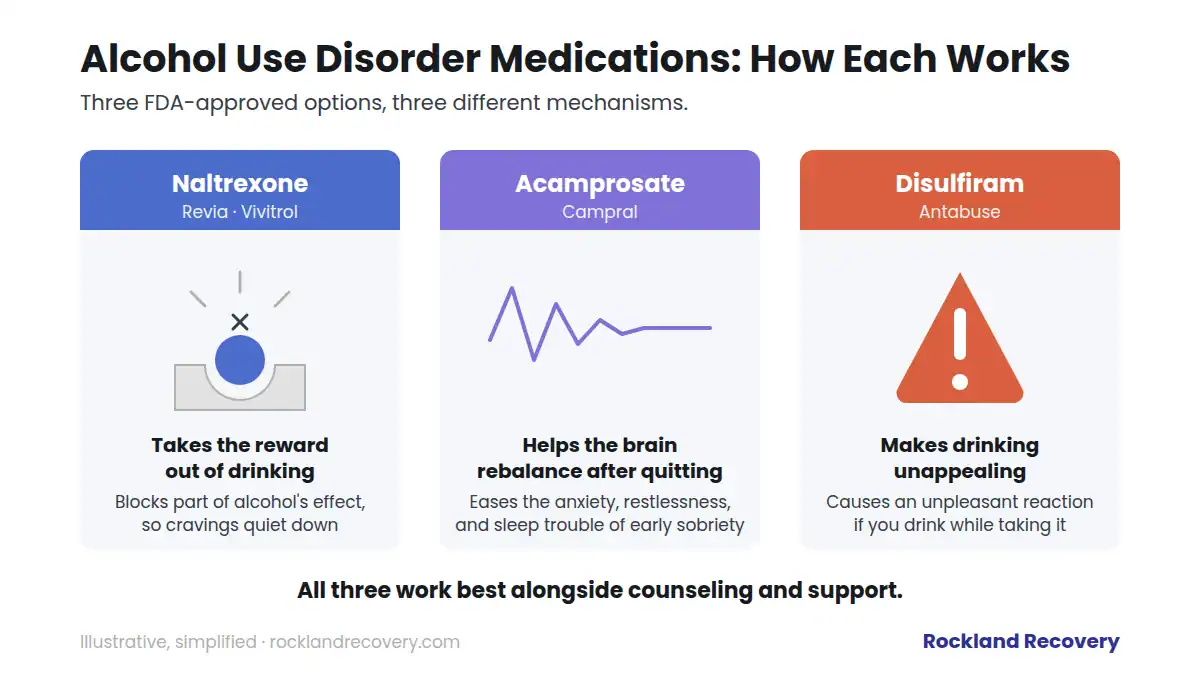
Naltrexone reduces cravings and takes the reward out of drinking by blocking the brain’s opioid receptors, which alcohol relies on for part of its pleasurable effect. When drinking is less satisfying, it becomes easier to cut back or stop. It comes as a daily tablet or as the monthly Vivitrol injection, and a person does not have to be fully abstinent to begin. It is a strong first option for many people who want to reduce heavy drinking.
Side effects are usually mild and early: nausea is the most common, along with headache and tiredness, and they tend to fade within the first weeks. The important exclusions are anyone currently taking opioids, since naltrexone blocks them and can trigger withdrawal, and people with serious liver disease.
Acamprosate (Campral)
Acamprosate helps the brain rebalance after long-term drinking. Heavy alcohol use disrupts the brain’s chemistry, and acamprosate supports the return to normal, easing the lingering anxiety, restlessness, and sleep trouble that can last for weeks after drinking stops. It works best for people who have already quit and want to stay abstinent, so it is usually started after detox. It is taken as tablets a few times a day.
Its most common side effect is diarrhea, usually temporary. Because the kidneys clear it rather than the liver, it is often the pick for people with liver problems, and the one that needs caution with kidney disease instead.
Disulfiram (Antabuse)
Disulfiram works by deterrence. It blocks the body from fully breaking down alcohol, so drinking while taking it causes an unpleasant reaction: flushing, nausea, a pounding heart, and headache. The reaction can be triggered for up to two weeks after the last dose, and it applies to hidden alcohol too, which is why people taking it learn to check sauces, mouthwash, and cold medicines. Knowing that reaction is coming helps some people stay away from alcohol entirely.
It depends heavily on motivation and consistency, since it only works if taken as prescribed, and it suits people who are committed to complete abstinence. Providers monitor liver health while you are on it.
Comparing the Three
| Medication | How it works | Best for | How it’s taken |
|---|---|---|---|
| Naltrexone | Reduces cravings and the reward of drinking | Cutting back or quitting; can start while still drinking | Daily tablet or monthly injection (Vivitrol) |
| Acamprosate | Helps the brain rebalance after drinking stops | Staying abstinent after detox; safe with liver disease | Tablets, a few times daily |
| Disulfiram | Causes an unpleasant reaction if you drink | Motivated people committed to full abstinence | Daily tablet |
Off-Label Options Your Provider Might Discuss
Beyond the three approved medications, two others have enough evidence behind them that clinical guidelines treat them as legitimate options. Gabapentin, better known for nerve pain, can reduce drinking and helps particularly with the sleep trouble and anxiety of early abstinence. Topiramate, a seizure medication, has solid research showing it reduces heavy drinking, though it is started slowly because of side effects like tingling and word-finding trouble. Neither is FDA-approved for alcohol use disorder, so this is prescriber-judgment territory, usually when the first-line options have not fit.
What These Medications Cost
Better news than most people expect. Naltrexone tablets, acamprosate, and disulfiram are all inexpensive generics, often costing less per month than the drinking they replace, and most insurance plans including MassHealth cover them. The Vivitrol injection is the costly exception at list price, but coverage is broad and a manufacturer copay program helps; our Vivitrol guide covers the details. Cost is rarely the real barrier here. Not knowing the options exist is.
How to Know Which Is Right for You
There is no single best medication. The right fit depends on whether your goal is to cut back or quit entirely, whether you have already stopped drinking, your health history, and your own preferences. A provider who treats alcohol use disorder can match the option to your situation and adjust if the first choice is not the right one.
What Starting Medication Looks Like at a Treatment Center
The process is simpler than people imagine. It starts with an assessment: your drinking history, your health, your goals, and any medications you already take. If you are still drinking heavily, the first step may be medically supervised detox, because stopping suddenly can be dangerous; our guide on how long alcohol withdrawal lasts explains why. From there, your prescriber recommends a medication, you start it with follow-up visits to adjust, and counseling runs alongside it from day one. The medication quiets the pull of alcohol; the therapy works on everything underneath it.
Medication Works Best With Support
Medication removes some of the physical pull of alcohol, but recovery also means addressing the habits and stresses underneath it. Our medication-assisted treatment program in South Shore Massachusetts combines these medications with counseling, and with medically supervised detox when it is needed. If you are wondering where to start, verify your insurance or call us at 855-732-4842.
Frequently Asked Questions
What is the best medication for alcohol cravings?
Naltrexone is often the first choice for reducing cravings, because it lessens the reward of drinking and can be started without full abstinence. The best option still depends on the individual.
Can you drink on naltrexone?
You can, and it will not make you sick. It reduces the reward and cravings around alcohol, which helps people drink less over time.
Do medications for alcohol use disorder actually work?
Yes. All three are FDA-approved and supported by research, and they work best combined with counseling and support rather than used alone.
Can you get naltrexone without going to rehab?
Yes. Any licensed prescriber can prescribe it, including a primary care doctor. That said, pairing medication with counseling works measurably better than medication alone, which is what a structured program provides.
Do you need to detox before starting?
It depends on the medication. Acamprosate is started after you have stopped drinking, while naltrexone can begin sooner. Because alcohol withdrawal can be dangerous, any detox should be medically supervised.
This article is for general education and is not medical advice. Decisions about medication for alcohol use disorder should be made with a licensed provider who knows your history.